How to Tie Off a Stretch Bracelet: Knots That Hold
The finishing knots for elastic and cord, explained step by step: pre-stretching, the surgeon's knot, the two-strand overhand knot, a dot of flexible glue and how to hide the knot inside a bead.
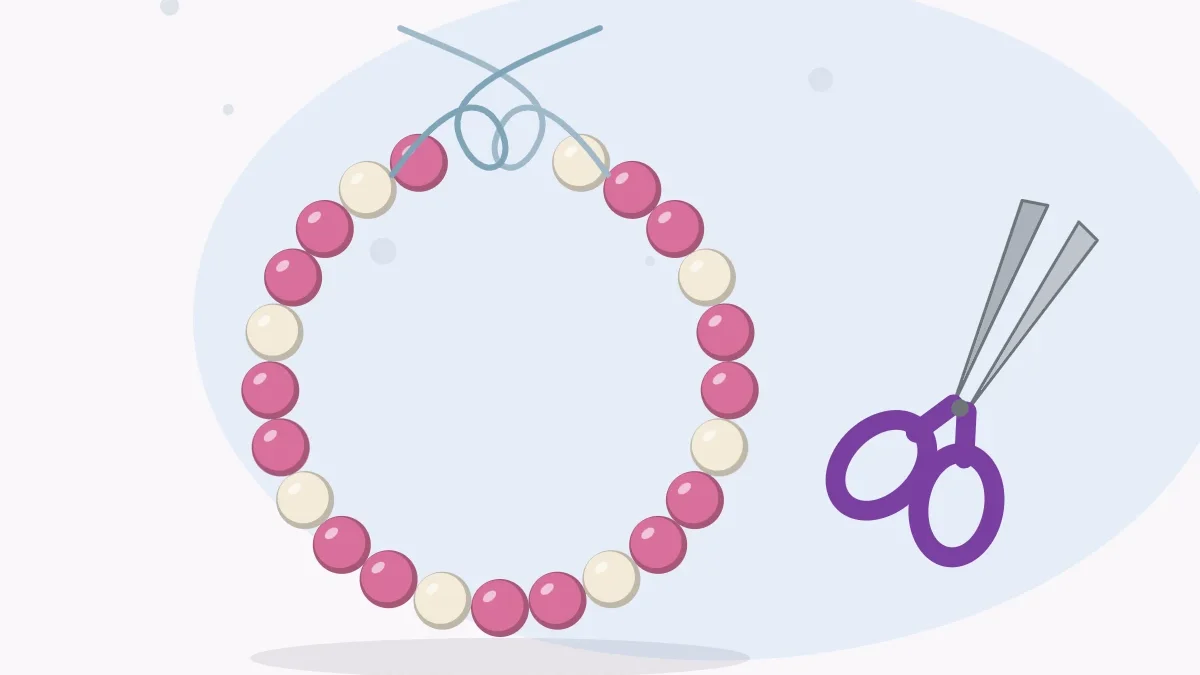
The knot is the only thing holding an elastic bracelet together, so how to tie a stretch bracelet is worth learning properly once. Elastic cord is smooth and springy, which lets ordinary knots work loose. The answer is a knot with extra wraps, tied on cord that has been pre-stretched, then set with a tiny dot of glue and tucked out of sight.
Before the knot: three things that make it hold
- Use the right cord. Clear elastic cord of 0.7 to 0.8 mm suits 6 to 8 mm beads, 0.5 mm suits seed beads and small holes, and 1 mm suits large, heavy beads. Cord that is too thin for the weight is under strain at the knot all the time. The guide to stringing materials compares the options.
- Cut generously. Cut the strung length plus about 4 to 6 in (10 to 15 cm). For a 7 in (18 cm) bracelet that means roughly 11 to 13 in (28 to 33 cm) of cord. Short tails are hard to grip.
- Pre-stretch. Hold a section of the cord between both hands and pull it firmly several times, working along the whole length. New elastic relaxes a little the first few times it is stretched. Doing this before stringing means the bracelet does not loosen and show gaps after a few days of wear.
String the beads, then check the fit around the wrist while pinching the ends together. Add or remove a bead now; nothing can be changed after the knot.
The surgeon’s knot, step by step
The surgeon’s knot is a square knot with one extra wrap in the first half. That extra wrap adds friction, so the first half stays put while the second half is tied. It is the standard finish for the easy elastic bead bracelet.
- Close the circle. Bring the two ends together so the first and last beads touch. Let the bracelet rest on the mat so its weight is not pulling on the cord.
- Cross and wrap twice. Lay the left end over the right end and pass it under, as for the first half of a shoelace knot. Then pass the same end under one more time, so the cords twist around each other twice.
- Snug it down. Pull both ends sideways, away from each other, until the double wrap sits against the beads. The beads should touch with no cord showing between them, but the bracelet should not pucker.
- Tie the second half. Now lay the right end over the left end and pass it under once. Crossing in the opposite direction is what makes the knot lie flat.
- Tighten in stages. Pull the two ends apart firmly, then pull each end against the bracelet strand next to it. Stretch the bracelet gently and pull the ends once more. The knot should shrink into a small, hard bump.
- Add one more half knot if the cord is very slippery. A third pass, left over right again, gives extra holding power on thin 0.5 mm cord.

Tip
If the beads slide apart while the knot is being tied, clip a small binder clip or a piece of tape onto one tail right next to the last bead until the first wraps are in place.
The overhand knot with both strands
This is the quickest finish and a useful backup. Hold the two ends together side by side and treat them as a single cord. Make a loop, pass both ends through it together, and slide the loop down toward the beads before pulling tight.
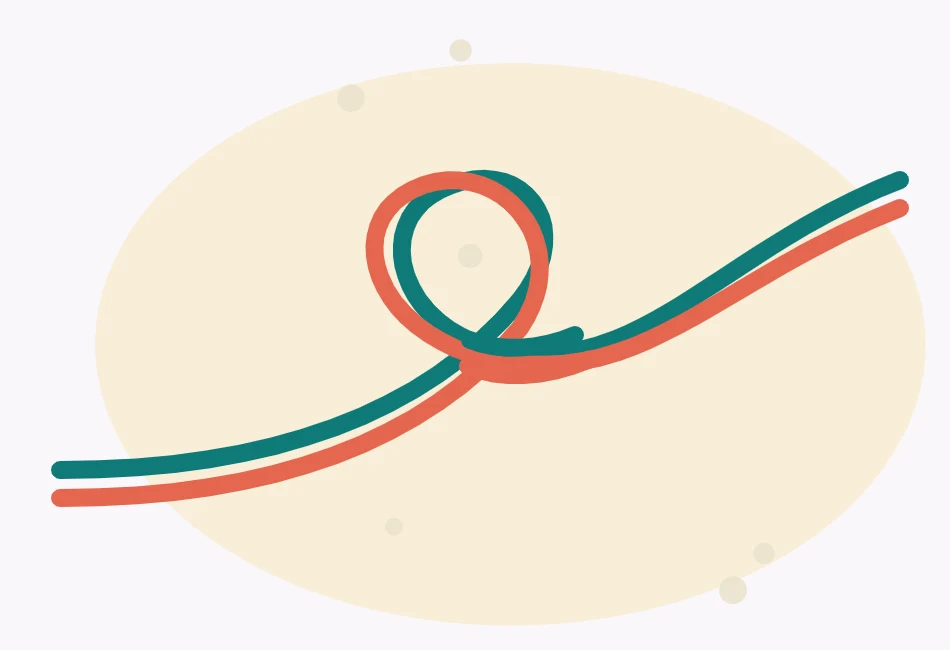
The overhand knot is bulkier than a surgeon’s knot and sits to one side of the strand, so it is harder to hide. It suits thicker cotton or waxed cord and bracelets with large-hole beads.
Why a plain square knot slips
A square knot is right over left, then left over right, with a single wrap each time. On cotton cord it holds reasonably well, because the fibers grip each other. On elastic, the single first wrap springs open as soon as the tension is released, and the smooth surface lets the finished knot creep each time the bracelet is pulled over the hand. The extra wrap of the surgeon’s knot adds the friction that is missing.
| Knot | Best on | Size | Holding on elastic |
|---|---|---|---|
| Surgeon’s knot | Elastic cord of any diameter | Small and flat | Good, especially with a dot of glue |
| Overhand, both strands | Thicker cord; as a backup on elastic | Bulky and off-center | Good, but hard to hide |
| Square knot | Cotton and waxed cord | Small and flat | Tends to slip |
Glue, hiding the knot and trimming
- Add a dot of flexible glue. Use a clear jewelry glue that stays flexible when dry, and apply the smallest drop possible to the knot with a pin or toothpick. Rigid instant glues can dry hard and leave the cord stiff at the knot. Keep glue off the beads and work in a ventilated room.
- Let it dry. Follow the time on the tube before stretching or trimming.
- Trim the tails. Cut each tail to about 1/8 in (3 mm). Cutting flush against the knot leaves nothing to spare if the knot settles slightly.
- Hide the knot. Stretch the bracelet a little and ease the knot into the hole of the bead beside it. Plan for this in the layout by placing a bead with a larger hole, such as a metal spacer or an 8 mm bead, where the knot will fall. Do not force a knot into a hole that is too small.
Watch out
Trimming tails too short and skipping the pre-stretch are two common causes of a stretch bracelet coming apart. Both appear in the list of common beading mistakes, along with their fixes.
If this happens, do that
- Cord shows between the beads after knotting. The first wrap loosened. Cut the knot off and retie if the tails are still long enough to grip; otherwise restring.
- The knot will not fit inside a bead. Leave it outside, beside a spacer where it is least visible.
When to restring
Elastic wears out with stretching, water, lotion and sunlight, so a stretch bracelet is a piece to maintain, not a permanent one. Restring when the cord looks frayed, cloudy or thinner near the knot, when gaps appear between beads that used to touch, or when the bracelet no longer springs back after being stretched. A set worn together, such as stacked stretch bracelets, is best restrung at the same time.
Frequently asked questions
What is the best knot for a stretch bracelet?
The surgeon's knot is the usual choice. It is a square knot with an extra wrap in the first half, and that extra friction keeps the first half from springing open on smooth elastic while the second half is tied.
Does a stretch bracelet knot need glue?
A well-tightened surgeon's knot holds without it, but a tiny dot of clear jewelry glue that stays flexible when dry helps keep the wraps from creeping. Use very little, keep it off the beads, and let it dry before trimming the tails.
How long should the tails be after trimming?
About 1/8 in (3 mm). Tails cut flush against the knot leave no margin if the knot settles, while tails of this length still tuck inside a neighboring bead with a large enough hole.
Why does the elastic bracelet get loose after a few days?
New elastic relaxes slightly the first few times it is stretched. Pulling the cord firmly along its whole length before stringing takes out that early give, so the beads stay snug after the knot is tied.