How to Measure for Jewelry: Wrist, Neck and Finger
How to measure a wrist, neck, ankle and finger with a tape or paper strip, how much ease to add for each bead size, and how to turn the final length into a bead count.
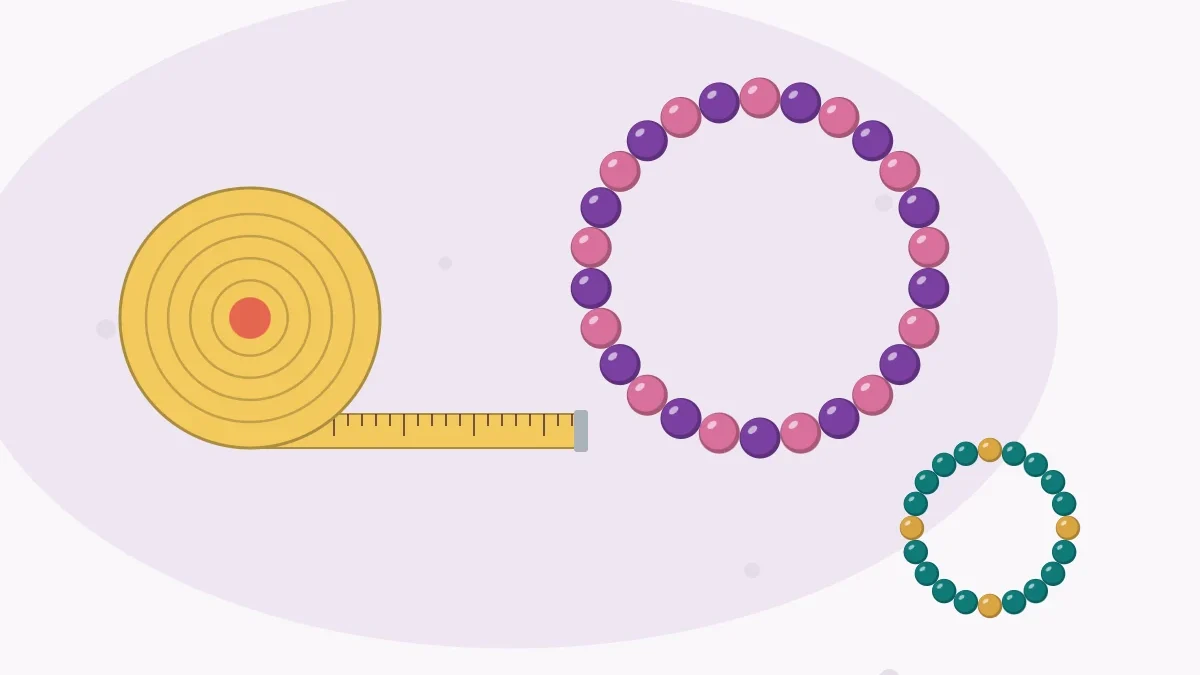
Knowing how to measure for jewelry comes down to two numbers: the size of the body part and the extra length, called ease, that the beads themselves take up. Get both right and a bracelet, necklace, anklet or ring fits the first time, with a bead count that can be worked out before anything is strung.
What to measure with
- A flexible tape measure, the soft kind used for fabric, marked in inches and centimeters.
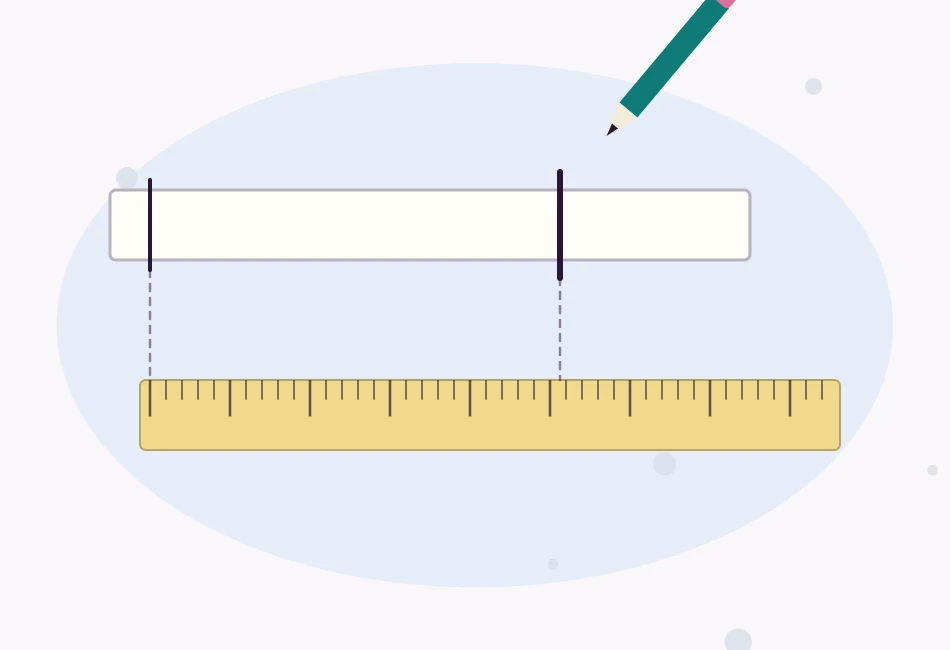
- A paper strip and a ruler if no tape is at hand. Cut a strip about 1/4 in (6 mm) wide, wrap it, mark where it overlaps with a pencil, and lay it flat against the ruler.
- A note of the result. Write down each measurement with the date and whose it is. Measure, do not guess: typical adult wrists run roughly 6 to 7.5 in (15 to 19 cm), which is a wide range for a bracelet.
String and elastic stretch, so they give readings that are too short. Paper and tape do not.
How to measure each body part
Wrist
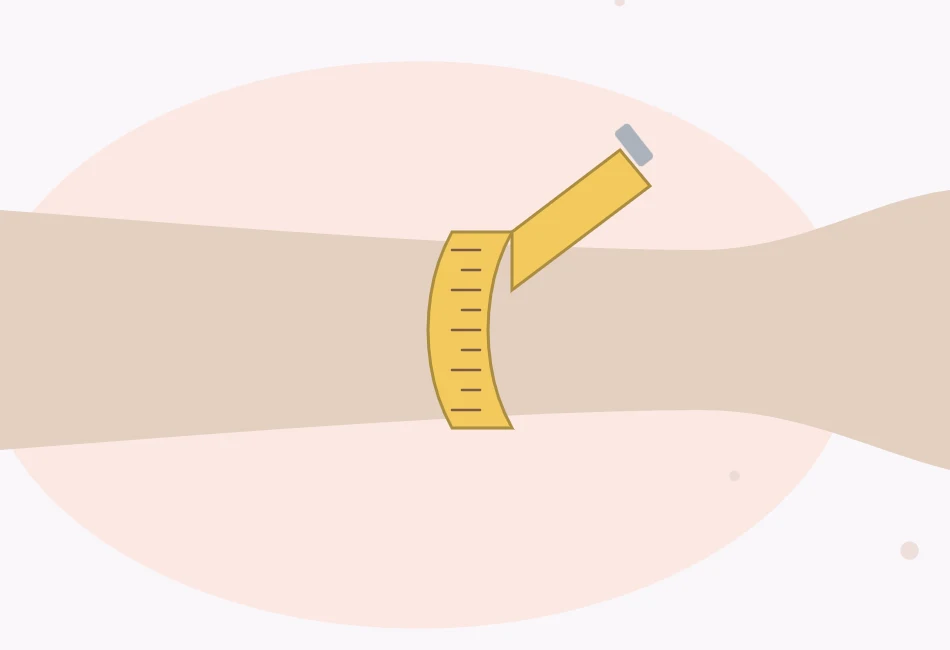
Wrap the tape around the wrist just above the wrist bone, on the side toward the elbow, where a bracelet naturally rests. The tape should lie flat and snug without pressing into the skin. Read the number where the end of the tape meets the scale.
Neck
For a close-fitting style, wrap the tape around the base of the neck and add about 1 to 2 in (2.5 to 5 cm) so the strand does not press on the throat. Longer necklaces are chosen by where they should fall instead: hold the tape like a necklace, slide it until the lowest point sits where the piece should hang, and read the length. The standard names and ranges are listed in the necklace length guide.
Ankle
Measure just above the ankle bone while standing, since the ankle is slightly fuller with weight on it. Adult ankles are often around 8.5 to 10 in (22 to 25 cm).
Finger
Wrap a narrow paper strip around the base of the finger, mark the overlap, and measure the strip in millimeters. Then check that the marked loop slides over the knuckle; if it does not, use a size between the two. Fingers swell when warm, so measure at room temperature. A ring size table converts the circumference to a size: about 51.9 mm for US size 6, 54.4 mm for size 7, 57.0 mm for size 8 and 59.5 mm for size 9.
Why beads need ease
A strand of beads is measured along the cord, which runs through the center of each bead. When the strand is closed into a circle, half of every bead sits inside that circle, so the opening is smaller than the strand length suggests. The difference is about three times the bead diameter. That gives the rule used for every closed loop:
Strung length = body measurement + about 3 × bead diameter.
| Bead size | Ease to add |
|---|---|
| Seed beads (size 11/0 to 6/0) | About 0.25 to 0.4 in (6 to 10 mm) |
| 4 mm round | About 0.5 in (12 mm) |
| 6 mm round | About 0.75 in (19 mm) |
| 8 mm round | About 1 in (25 mm) |
| 10 mm round | About 1.2 in (30 mm) |
This is why a bracelet of large beads feels tight when it is strung to the same length as one of small beads.
Watch out
Ease belongs to pieces that close into a circle around the body. A necklace that hangs in a long curve is simply made to the length chosen with the tape.
Turning a length into a bead count
For round beads, convert the strung length to millimeters (1 in = 25.4 mm) and divide by the bead diameter. For seed beads, multiply the length in inches by the beads per inch: about 17 to 18 for size 11/0, about 11 for size 8/0 and about 8 for size 6/0. Seed beads vary between makers, so string an inch and count before relying on these figures. The full table is in the bead size guide.
If the piece has a clasp, the clasp takes up part of the length. A lobster clasp, its ring and two crimps add up to roughly 0.75 to 1 in (19 to 25 mm), so beaded length = finished length − clasp section.
A worked example for each piece
Stretch bracelet
The wrist measures 6.25 in and the beads are 6 mm rounds. Strung length: 6.25 + 0.75 = 7 in, or 178 mm. Bead count: 178 ÷ 6 = 29.7, so about 30 beads. This is the sum behind the easy elastic bead bracelet.
Bracelet with a clasp
The same 7 in finished length with a clasp section of 1 in leaves 7 − 1 = 6 in of beads, or about 152 mm. With 6 mm beads, 152 ÷ 6 = 25.3, so about 25 beads.
Necklace
The tape shows that an 18 in strand falls where it should. With a 1 in clasp section, the beaded length is 18 − 1 = 17 in, or about 432 mm. In 6 mm beads, 432 ÷ 6 = 72 beads.
Anklet
The ankle measures 9 in and the beads are 4 mm rounds on elastic. Strung length: 9 + 0.5 = 9.5 in, or about 241 mm. Bead count: 241 ÷ 4 = 60.3, so about 60 beads.
Ring
The paper strip measures 54.4 mm, a US size 7, and the beads are size 8/0 seed beads about 3 mm thick. Strung length: 54.4 + 9 = about 63 mm. That takes about 22 to 25 beads, depending on the batch: on a circle this small the beads fan out, so each fills more of it than on a straight strand. The method is shown step by step in seed bead stretch rings.
Tip
Treat every count as a first estimate. Before knotting or crimping, wrap the strung piece around the wrist, ankle or finger while holding the ends together, and add or remove a bead or two. Buy a few spare beads so there is room to adjust.
Measuring for someone else
- Borrow a piece that fits. Lay a bracelet or necklace they already wear flat and measure it end to end, including the clasp. For a stretch bracelet, measure the inside circumference with a paper strip.
- Choose a forgiving design. Elastic bracelets, long necklaces that slip over the head and adjustable cords cope with a guess better than a fitted bracelet with a clasp.
- Size carefully for children. Children’s wrists are much smaller than adult wrists, so always measure. Beads are small parts: keep them away from young children and pets, and supervise children who wear or make beaded pieces.
Frequently asked questions
How much longer than the wrist should a beaded bracelet be?
Add about three times the bead diameter to the wrist measurement: roughly 0.5 in for 4 mm beads, 0.75 in for 6 mm beads and 1 in for 8 mm beads. A 6.25 in wrist with 6 mm beads needs a strand of about 7 in.
Can a piece of string be used instead of a tape measure?
A paper strip is a better substitute. String and elastic stretch while they are wrapped, which gives a reading that is too short. Wrap a narrow strip of paper, mark the overlap with a pencil, and measure the strip against a ruler.
Why do bigger beads need a longer strand?
The strand is measured through the center of the beads, but half of each bead sits inside the circle when the piece is closed. The larger the bead, the more room it takes from the opening, so the strand has to be longer to leave the same space for the wrist.
How is a finger measured for a beaded ring?
Wrap a narrow paper strip around the base of the finger, mark where it overlaps, and measure it in millimeters. Check that the loop passes over the knuckle, then add about three times the bead thickness to get the strung length.