Types of Beads: Glass, Seed, Wood, Stone, Metal and More
A plain guide to bead materials and shapes, what each one is good for, and why hole size and weight matter as much as color.
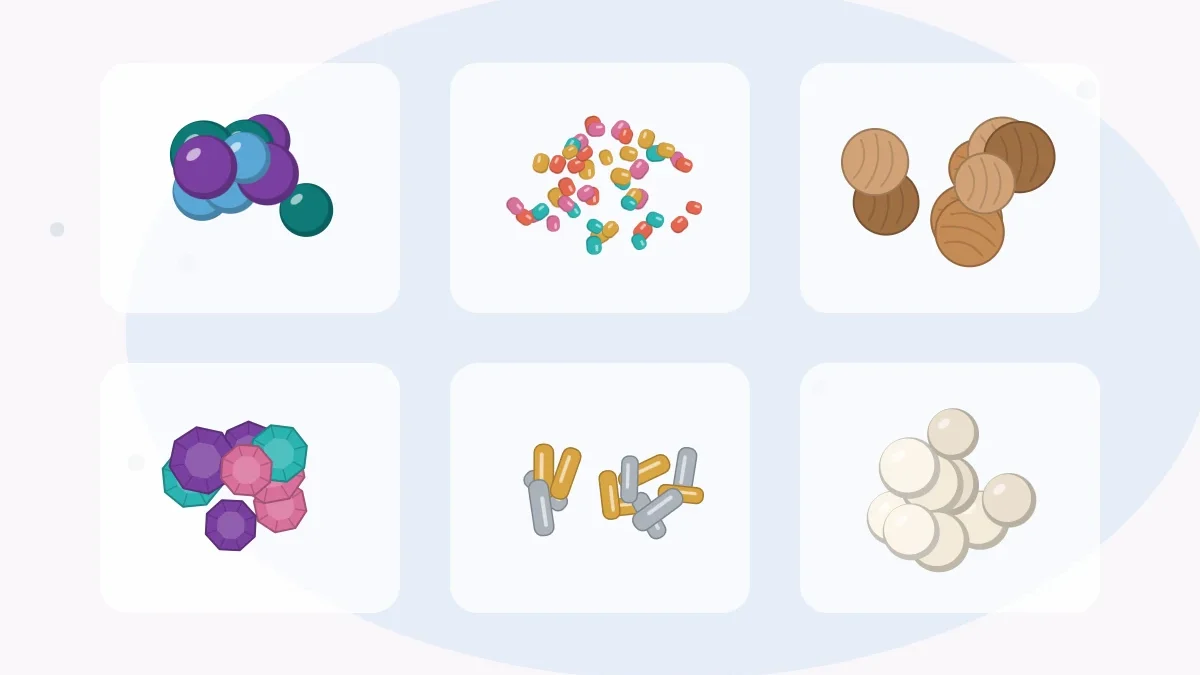
The main types of beads differ in two ways that matter at the worktable: what they are made of and what shape they are. Material decides weight, shine and how large the hole tends to be. Shape decides how the beads sit against each other on a strand. Once both are familiar, a wall of beads in a craft store becomes much easier to read.
Bead materials at a glance
| Material | Look | Weight | Typical hole | Good for |
|---|---|---|---|---|
| Glass | Shiny, clear or opaque, very wide color range | Medium | About 1 mm | Bracelets, necklaces, earrings |
| Seed beads | Tiny glass beads, uniform and colorful | Very light | Small | Thin bracelets, rings, bead weaving, spacing |
| Wood | Matte, warm, natural or dyed | Light | Often 2 mm or more | Chunky necklaces, cord projects |
| Stone | Natural patterns, polished or matte | Heavy | Small, sometimes uneven | Bracelets, focal beads |
| Metal spacers | Bright accent between larger beads | Medium to heavy | Varies widely | Framing and separating beads |
| Acrylic | Bright, sometimes translucent | Very light | Often large | Children’s projects, large earrings |
| Pearl-style | Soft sheen, smooth surface | Medium | Small | Classic strands, drops |
Glass beads
Glass is the everyday material of beaded jewelry. Pressed glass rounds are smooth and regular; faceted glass has flat cut faces that catch light. Round 6 mm glass beads are the usual choice for a first project such as an easy elastic bead bracelet, because they are consistent in size and simple to count.
Seed beads
Seed beads are small glass beads sold by size number: size 11/0 is about 2 mm wide, size 8/0 about 3 mm and size 6/0 about 4 mm. The bigger the number, the smaller the bead. Rounded seed beads have soft edges and suit stringing. Cylinder seed beads have straight sides and large holes, which helps them lock together neatly in woven work.
Wood beads
Wood is light for its size, so even 12 mm beads make a comfortable necklace. The holes are generous, which pairs well with waxed cotton or leather-style cord. Dyed wood can lose color when wet, so take wooden pieces off before swimming or showering.
Stone beads
Stone beads have natural variation: no two are quite the same. They are heavier than glass, and the drilled holes can be narrow or slightly rough at the edge. Check that the cord passes through before planning a design, and choose a sturdier stringing material for a full strand of stone.
Metal spacer beads
Spacers are small metal beads, often 3 to 4 mm, placed between larger beads to frame them and add a little shine. A few go a long way. If you have sensitive skin, check what a finding is made of before you buy, and treat spacers the same way.
Acrylic beads
Acrylic is molded plastic. It is very light, comes in large sizes and bright colors, and usually has a roomy hole. That makes it a practical choice for supervised children’s projects and for large earrings that would be uncomfortable in glass. The trade-off is a surface that scratches more easily and a visible mold seam on some beads.
Pearl-style beads
Most pearl-style beads sold for crafting are glass or acrylic with a pearly coating. Glass versions feel cooler and heavier in the hand. The coating can wear near the hole over time, so avoid dragging them along rough cord.
Bead shapes and how they sit on a strand
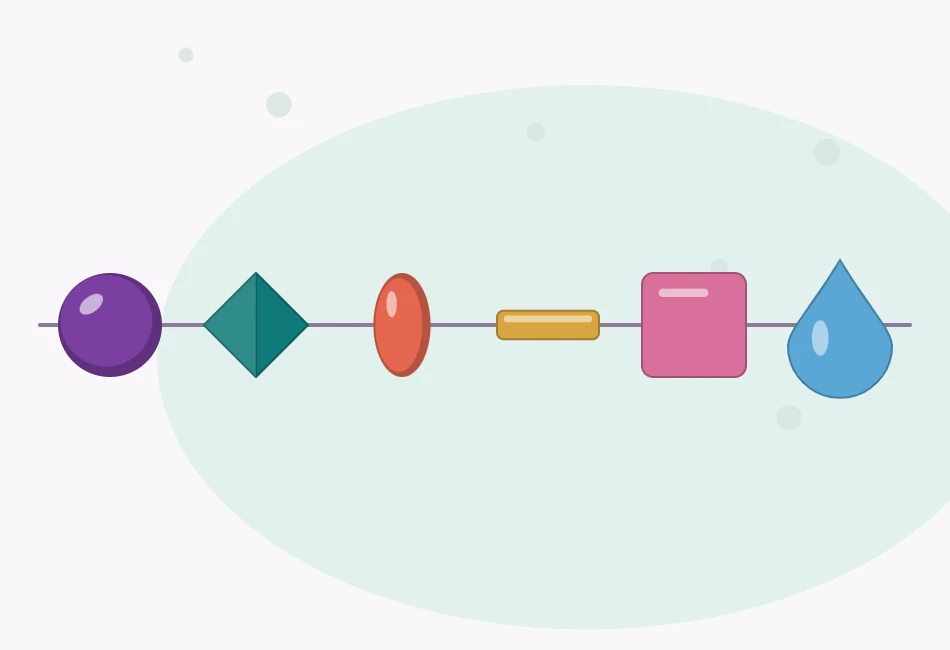
- Round: a sphere. Rounds roll smoothly against each other, so the strand curves evenly. The default for bracelets.
- Bicone: two cones joined at the widest point, usually faceted. Bicones touch only at their tips, which gives a sparkling, slightly open line.
- Rondelle: a flattened round, wider than it is long. A 6 mm rondelle may be only 4 mm long along the hole, so more are needed per inch.
- Bugle: a thin glass tube, a relative of the seed bead. Bugles add straight lines and length quickly, but their cut ends can be sharp against thread.
- Cube: a small block. Cubes sit flat against each other and make a strand look solid and geometric.
- Teardrop: narrow at one end and full at the other. Top-drilled drops hang outward like a fringe; drops drilled lengthwise work well on headpins.
Tip
For any shape that is not round, measure along the hole, not across the widest part. The length along the hole is what fills the strand.
Hole size: the detail beginners overlook
A bead is only usable if the stringing material fits through it, sometimes twice. Three quick checks avoid most surprises:
- Test before buying in quantity. Thread the cord through three or four beads from the batch, not just one, since holes vary.
- Allow for a second pass. Hiding a knot or passing a wire back through the last few beads needs extra room.
- Match large holes to thick cord. A wide hole on thin thread lets the bead wobble and the knot slip inside. A knotted bead necklace relies on large-hole beads and a cord thick enough for the knots to stop them.
The guide to stringing materials lists the diameters of elastic, beading wire, thread and cord to compare against a bead’s hole.
Weight and comfort
Weight adds up along a strand. A bracelet of 8 mm stone beads is noticeably heavier than the same bracelet in glass, and far heavier than acrylic or wood. Heavy beads stretch elastic sooner and pull on ear wires, so follow two simple habits: use 1 mm elastic or flexible beading wire for heavy strands, and keep earrings to light materials or small sizes.
Choosing beads for a first project
If the choice still feels wide, narrow it like this:
- First bracelet: round glass beads, 6 mm, in two or three colors, with a few metal spacers.
- First earrings: two or three small glass beads per drop, such as one 8 mm and two 4 mm.
- First cord necklace: wood or large-hole glass beads on 1 mm cord.
- First woven piece: size 8/0 seed beads, which are large enough to see the thread path.
Sizes are covered in full in the bead size guide, including how many beads of each size fill an inch. For a wider view of materials used across history and cultures, the Wikipedia article on the bead is a helpful overview.
Watch out
Beads are small parts. Keep them away from young children and pets, and supervise children who are beading.
Frequently asked questions
What type of bead is best for beginners?
Round glass beads of about 6 mm. They are consistent in size, easy to pick up and count, and fit the 0.7 to 0.8 mm elastic cord used for a first stretch bracelet.
What is the difference between a round bead and a rondelle?
A round bead is a sphere, so its length along the hole equals its diameter. A rondelle is flattened, wider than it is long, so it fills less of the strand and more beads are needed per inch.
Why does bead hole size matter?
The stringing material has to fit through the hole, sometimes twice when a knot is hidden or a wire is passed back. Holes also vary within a batch, so test the cord through several beads before planning a design.
Are acrylic beads good for jewelry?
Acrylic beads are very light and come in large sizes with roomy holes, which suits large earrings and supervised children's projects. They scratch more easily than glass and some show a mold seam.