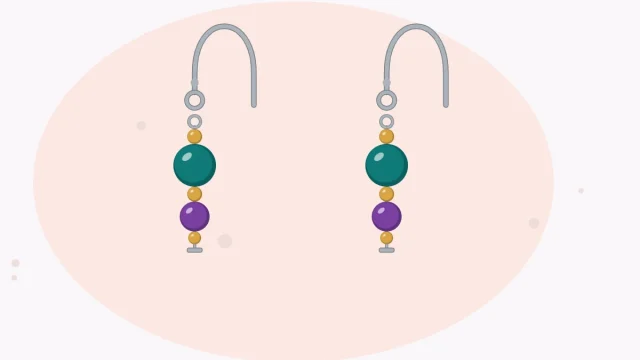
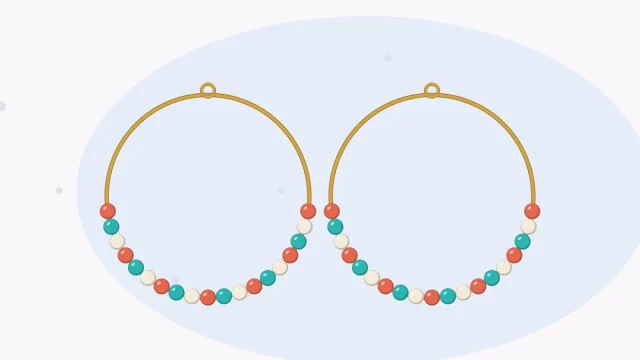
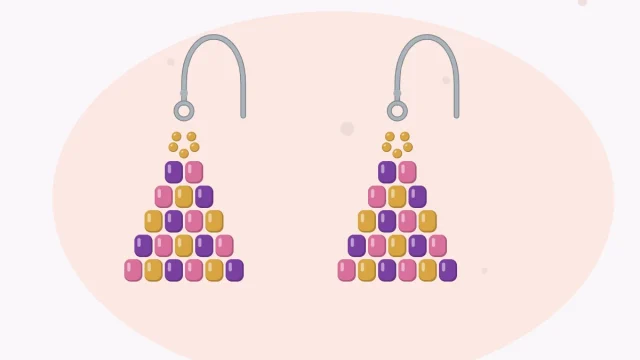
Earring Findings Explained: Ear Wires, Posts, Hoops, Headpins and Eye Pins
What each earring finding is and when to use it: hook ear wires, lever-backs, posts, hoops, headpins, eye pins and ball pins, plus how wire gauge affects the choice.
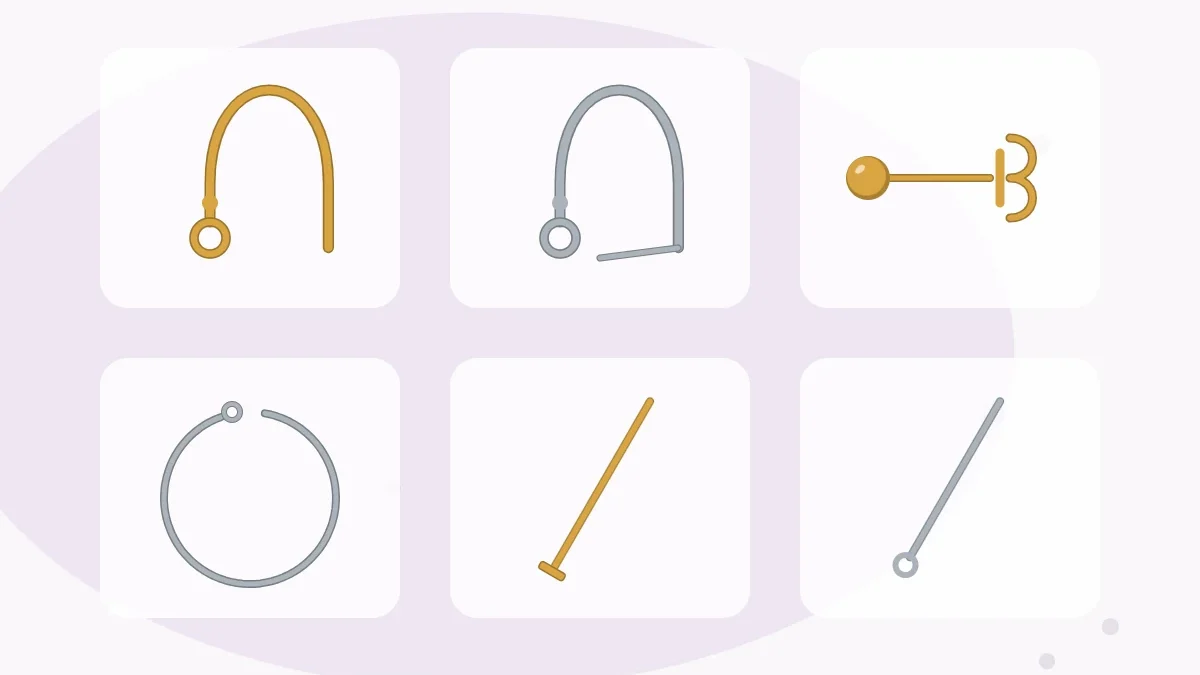
Earring findings are the small metal parts that turn a few beads into something wearable: the piece that goes through the ear, and the pins that hold the beads below it. This guide explains what each finding is, what it does and which one to reach for, so a shopping list for a first pair of earrings takes a minute to write.
Two jobs: holding the ear and holding the beads
Every beaded earring has two kinds of findings. The first kind attaches to the ear: hook ear wires, lever-backs, posts and hoops. The second kind carries the beads: headpins, eye pins and ball pins. The two are joined by a small loop, either a loop turned in the wire of the pin or a jump ring.
Findings that go through the ear
Hook ear wires
A hook ear wire, sometimes called a fish hook or French hook, is a curved wire with a small open loop at the front. The curve passes through the ear and the weight of the earring keeps it in place. Hooks are the usual choice for a first project because the loop opens with a sideways twist of the pliers and anything with a loop can hang from it. They are used in the simple bead drop earrings tutorial. A small rubber or plastic stopper pushed onto the back of the wire keeps a hook from working its way out.
Lever-backs
A lever-back is a hook with a hinged arm that snaps shut behind the ear, closing the wire into a complete ring. It is slightly bulkier than a plain hook, but it is hard to lose. Most lever-backs have a closed loop at the bottom, so the bead drop is attached by opening the loop on the drop itself or by adding a jump ring.
Posts with backs
A post is a short straight pin that goes through the ear and is held by a separate back, often a small butterfly-shaped clutch. For beaded earrings, look for posts with a ball or a flat front and a small loop beneath it. The loop works exactly like the loop on a hook. Posts sit close to the ear, so the drop starts higher and hangs neater on short designs.
Hoops
Beadable hoops are wire circles with a loop at one end and a straight end that latches into it. Beads slide directly onto the hoop, so no pins are needed at all. The beaded hoop earrings tutorial shows how to work out the bead count from the diameter.
| Finding | How it fastens | Best for | Keep in mind |
|---|---|---|---|
| Hook ear wire | Hangs by its curve | First projects, light drops | Can slip out without a stopper |
| Lever-back | Hinged arm snaps shut | Heavier or all-day earrings | Loop is usually closed |
| Post with back | Separate back grips the post | Short, neat drops | Backs are easy to lose; keep spares |
| Beadable hoop | Wire tip hooks into a loop | Rows of small beads | Bead holes must fit the hoop wire |
Findings that hold the beads
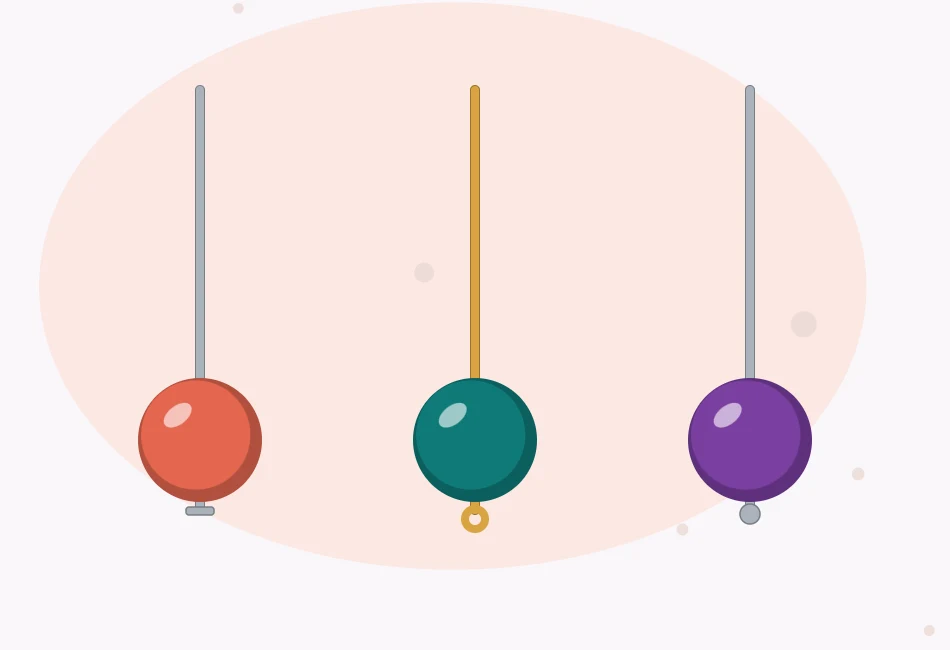
Headpins
A headpin is a straight length of wire with a flat head at one end, like a long, soft dressmaking pin without the point. Beads are stacked on it, the head stops them sliding off, and the wire above the top bead is turned into a loop. Headpins are commonly 2 in (50 mm) long, and a simple loop uses about 3/8 in (10 mm) of that length.
Eye pins
An eye pin has a ready-made loop instead of a head. It still stops the beads, but something else can hang from that loop: a second beaded link, a charm or a short length of chain. Turn a loop at the top as well and the result is a bead link with a loop at each end.
Ball pins
A ball pin ends in a tiny metal ball rather than a flat head. It does the same job as a headpin, and the ball looks like a small bead of its own at the bottom of the drop. Because the ball is narrow, check it against the bead: on beads with large holes it can slip straight through, and a small spacer bead is then needed first.
Jump rings
Jump rings are small wire rings with a cut. In earrings they connect parts that both have closed loops and add a little extra swing to a drop. They are opened by twisting the ends sideways, never by pulling them apart; the guide to clasps and jump rings shows the movement.
Wire gauge: thickness matters
Wire thickness is given as a gauge number, and the scale runs backward: the higher the number, the thinner the wire. Three sizes cover most beaded earrings.
- 20-gauge (0.8 mm): sturdy; typical for the part that passes through the ear and for pins carrying heavier beads.
- 22-gauge (0.64 mm): a good all-round headpin thickness that fits most 4 mm to 8 mm glass beads.
- 24-gauge (0.5 mm): thin; needed for pearls and small stone beads with narrow holes, but its loops pull open more easily.
Headpins are sold in roughly 21- to 24-gauge. Choose the thickest wire that passes through the bead without forcing: a thicker pin makes a firmer loop, and a bead that fits its pin closely does not wobble. This article on jewelry wire explains gauge and hardness in more detail.
Which finding for which earring?
- A single bead drop: 2 headpins and 2 hook ear wires.
- A long, jointed dangle: eye pins for the upper links, a headpin or ball pin for the bottom one.
- A woven piece with a thread loop, such as brick stitch earrings: hook ear wires, opened and closed around the bead loop.
- A heavier drop or a gift for someone who loses earrings: lever-backs.
- A short drop that should sit close to the ear: posts with a loop.
Buying and storing findings
Findings are sold by finish and by base material, and packets are not always labeled in the same way. If you have sensitive skin, check what a finding is made of before you buy.
A few practical checks save wasted purchases:
- Buy more pins than the project needs. Loops go wrong, and a pin that has been bent and straightened is weaker.
- Keep findings for one project in a single color tone, such as all silver-tone or all gold-tone.
- Store each type in its own small labeled bag or compartment, with the gauge and length written on it.
Watch out
Findings are small parts with pointed ends. Keep them away from young children and pets, and supervise children who are beading.
Frequently asked questions
What is the difference between a headpin and an eye pin?
A headpin has a flat head that stops the beads and is used for the bottom of a drop. An eye pin has a loop instead of a head, so another link, charm or chain can hang beneath it.
Which ear wire is easiest for beginners?
A hook ear wire. Its loop opens with a sideways twist of the pliers, any part with a loop can hang from it, and it needs no separate back, although a small stopper helps keep it in place.
What gauge headpin fits most beads?
22-gauge (0.64 mm) passes through most 4 mm to 8 mm glass beads. Pearls and small stone beads with narrow holes often need 24-gauge (0.5 mm). Use the thickest pin that fits without forcing.
Are jump rings needed for earrings?
Not always. A loop turned in a headpin can hang directly from an open ear wire loop. Jump rings are useful when both parts have closed loops, or to give a drop more movement.