Necklace Length Guide: From Choker to Rope
The standard necklace length names with inch and centimeter ranges, how to measure the neck, how bead size and pendants change the fit, and how many beads each length takes.
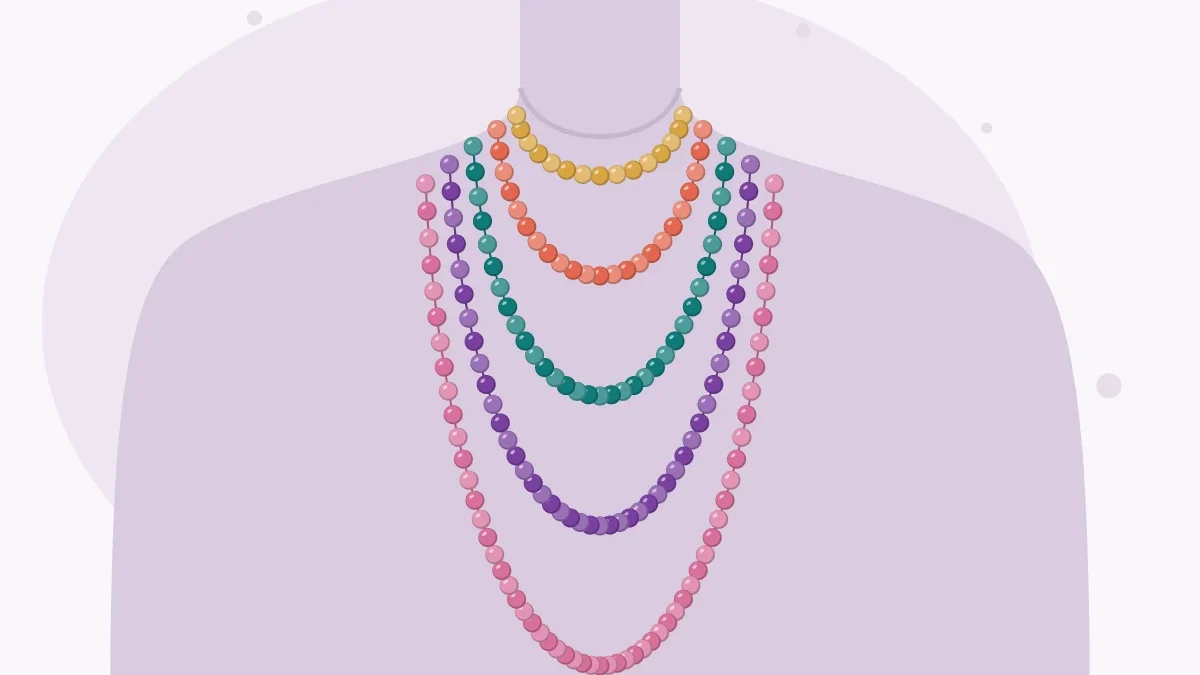
A necklace length guide answers the question that comes before any stringing starts: how long should the strand be? Two inches can move a necklace from the base of the throat to below the collarbone, so the length decides how a piece looks and which neckline it suits. The standard names below, from collar to rope, give a shared vocabulary for patterns and bead counts.
The six standard necklace lengths
The names are traditional and the ranges vary a little from one source to another, so treat the figures as a guide and not as a fixed rule. The lengths are measured along the whole necklace, clasp included, laid out straight.
| Name | Length (in) | Length (cm) | Where it usually sits |
|---|---|---|---|
| Collar | 12-14 | 30-36 | Snug around the middle of the neck |
| Choker | 14-16 | 36-41 | At the base of the neck |
| Princess | 17-19 | 43-48 | On or just below the collarbone |
| Matinee | 20-24 | 51-61 | Between the collarbone and the bust |
| Opera | 28-36 | 71-91 | At or below the bust |
| Rope | Over 36 | Over 91 | Near the waist, or doubled into two loops |
Where a strand sits depends on the wearer as much as on the tape measure. The same 18 in (46 cm) strand lies at the collarbone on one person and at the base of the throat on another. That is why measuring matters more than the name. For the history behind the terms, see the overview of necklace types and length names.
How to measure for a necklace
There are two useful measurements, and both take under a minute.
- Measure the neck. Wrap a soft tape measure around the base of the neck, where a close necklace would rest. Keep it level and snug but not tight, and note the number.
- Add room for a close fit. For a collar or choker, add about 1 to 2 in (2.5 to 5 cm) to the neck measurement so the strand can move. A 13 in neck suits a 14 to 15 in strand.
- Test longer lengths with cord. For anything below the neck, drape a piece of cord or ribbon where the necklace should hang, pinch it at the back and measure it flat against a ruler.
The guide on how to measure for jewelry covers wrists, ankles and fingers in the same way.
Tip
Measure an existing necklace that already sits in the right place. Lay it straight, clasp open, and measure from one end to the other. That one number is more reliable than any chart.
How bead size changes the fit
A strand of large beads sits shorter than a strand of small beads of the same length. The length is measured through the centers of the beads, but the neck touches their inner edge. The inside of the circle is smaller than the strand by about three times the bead diameter.
The effect is small with small beads and obvious with large ones:
- A 16 in strand of 4 mm beads has an inside of about 16 − 0.5 = 15.5 in.
- A 16 in strand of 6 mm beads has an inside of about 16 − 0.75 = 15.25 in.
- A 16 in strand of 10 mm beads loses 30 mm, about 1.2 in, leaving roughly 14.8 in.
For a collar or choker in chunky beads, add that difference to the planned length.
Pendants and weight
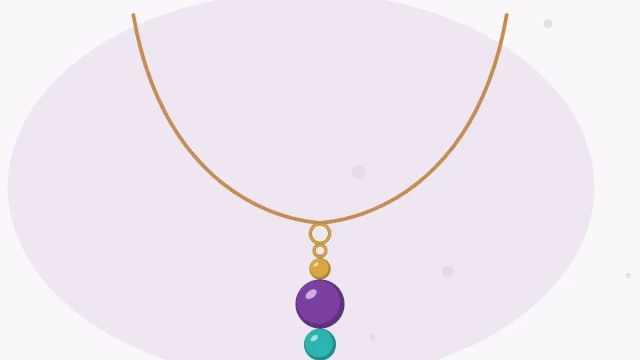
A pendant adds its own height below the strand, and its weight pulls the necklace into a V shape. A drop 1 in (25 mm) tall on an 18 in cord reaches about an inch lower than plain beads of the same length would. To keep a pendant at a chosen spot, shorten the strand slightly. A beaded pendant necklace on an adjustable cord makes it easy to try several positions before settling on one.
How many beads each length takes
The count is the beaded length in millimeters divided by the bead diameter. A clasp, its ring and the crimps take up about 1 in (25 mm), so the beaded length is the finished length minus 1 in. For an 18 in necklace in 6 mm beads: 17 in × 25.4 = about 432 mm, and 432 ÷ 6 = 72 beads.
| Finished length | Beaded length | 4 mm beads | 6 mm beads | 8 mm beads |
|---|---|---|---|---|
| 16 in (41 cm) | 15 in (381 mm) | About 95 | About 64 | About 48 |
| 18 in (46 cm) | 17 in (432 mm) | About 108 | About 72 | About 54 |
| 20 in (51 cm) | 19 in (483 mm) | About 121 | About 80 | About 60 |
| 24 in (61 cm) | 23 in (584 mm) | About 146 | About 97 | About 73 |
| 30 in (76 cm) | 29 in (737 mm) | About 184 | About 123 | About 92 |
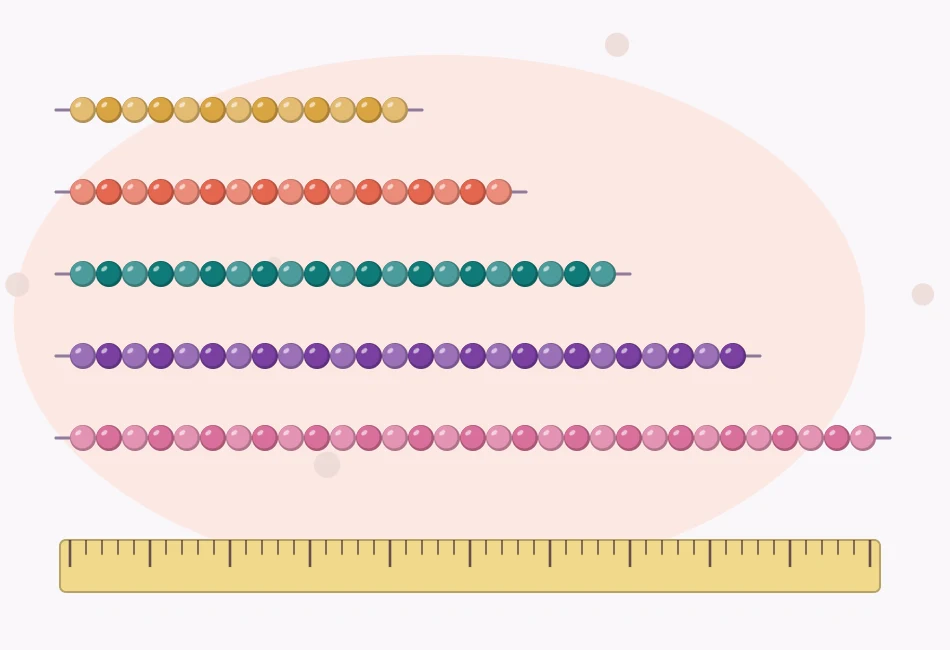
Bead sizes are nominal, so buy a few more than the table says and check the strand against a ruler before finishing the second end. Mixed designs work the same way: add up the diameters of every bead in the plan. The simple beaded necklace tutorial shows that arithmetic for a strand with three bead sizes.
Layering several necklaces
Layers look clearest when each strand has its own space. A few habits help:
- Leave about 2 in (5 cm) between lengths. A set of 16, 18 and 20 in sits as three separate lines. Strands closer than that tend to overlap and tangle.
- Change the scale. Combine a fine seed bead strand with a bolder one so the layers do not compete.
- Put the weight at the bottom. The longest strand carries a pendant or the largest beads well, because it hangs straight.
Clasp or no clasp?
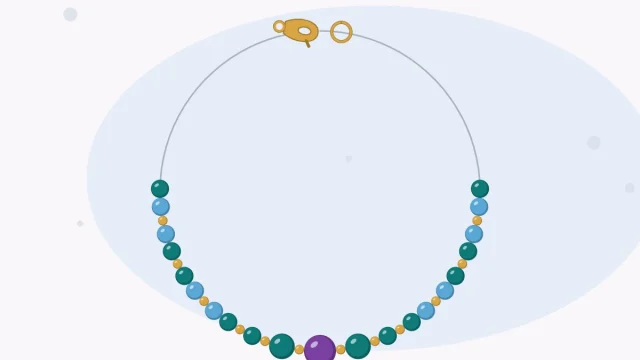
Short strands need a clasp, since they cannot pass over the head. Strands of about 26 in (66 cm) and longer usually can, although head sizes differ, so test with a loop of cord first. The knotted bead necklace is built on that idea: a 27 in loop of cord and beads that slips straight on.
Watch out
A collar that is too tight is uncomfortable, and the strain can break the stringing material. If a close-fitting strand leaves marks or will not turn freely on the neck, add half an inch, or finish it with a short length of chain behind the clasp so the fit can be changed.
Quick decision list
- A first necklace: 18 in. It suits most necklines and is the easiest length to plan.
- A pendant on cord: 20 to 26 in, or an adjustable cord.
- No clasp: 26 in or more, checked over the head.
- A gift: 18 in with an extender chain, which covers the widest range of wearers.
Frequently asked questions
What is the most common necklace length?
The princess length, about 17 to 19 in (43 to 48 cm), is a popular everyday choice and a practical one for a first strand. It sits on or just below the collarbone on many adults and suits most necklines.
How long is a choker?
A choker is usually about 14 to 16 in (36 to 41 cm) and rests at the base of the neck. Measure the neck and add about 1 to 2 in so the strand can move, and add a little more for large beads.
How many 6 mm beads are needed for an 18 in necklace?
About 72. Allow roughly 1 in for the clasp section, which leaves a beaded length of 17 in, or about 432 mm, and 432 divided by 6 is 72. Buy a few extra, because bead sizes are nominal.
Do large beads make a necklace fit tighter?
Yes. The inside of a beaded circle is smaller than the strand length by about three times the bead diameter, so a strand of 10 mm beads sits about 1.2 in shorter than its measured length suggests.